In today’s lightning-fast digital world, texting has become its own language a universe of abbreviations, acronyms, and shorthand that can leave anyone scratching their head. One of the most mysterious and frequently encountered abbreviations is “JS”.
Whether you’ve seen it pop up in a casual chat, a social media comment, or even a professional message, its meaning isn’t always clear at first glance. Is it a sign of excitement, a casual shrug, or something more technical?
Understanding what JS means in text can save you from awkward miscommunications and help you decode the true tone behind a message. From playful banter to subtle expressions of emotion, this tiny abbreviation carries more weight than you might think.
What Does JS Mean in Text?
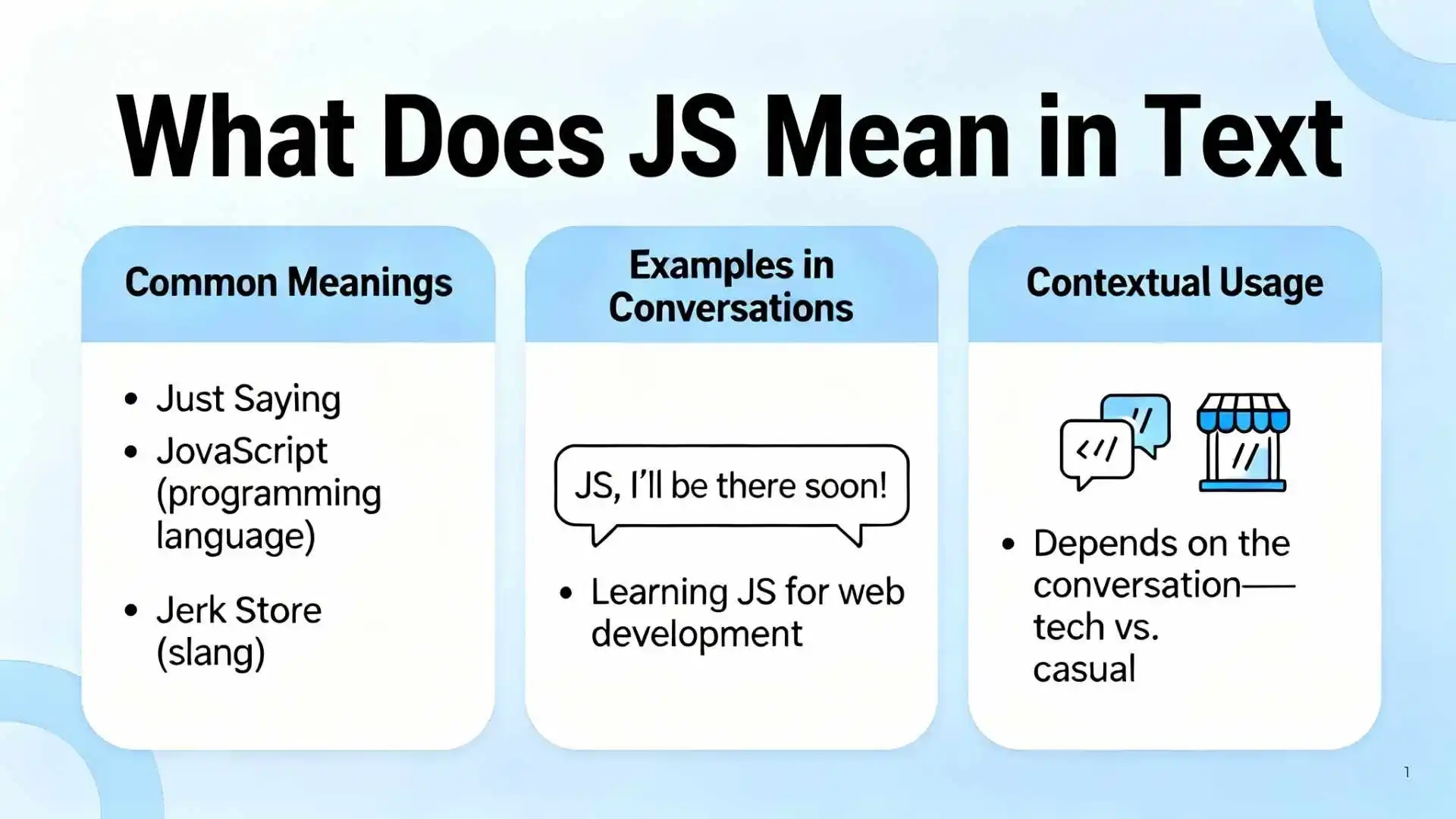
In texting and online slang, JS most commonly means “Just Saying.”
People use it to:
- Add emphasis
- Soften criticism
- Share an opinion casually
- End a statement without arguing
Example:
“That movie wasn’t that good, JS.”
(Translation: Just saying — that’s my opinion.)
It’s often used at the end of a sentence to avoid sounding too aggressive.
Can JS Mean Something Else?
Yes. Although “Just Saying” is the most common meaning, JS can also stand for:
| Meaning | Context | Example |
| Just Saying | Casual texting | “You could’ve called me, JS.” |
| JavaScript | Tech conversations | “I’m learning JS this week.” |
| Jesus | Religious chats | “Thank JS for that blessing.” (less common shorthand) |
| Job Security | Workplace slang | “Automation affects JS.” |
Context is everything. In most everyday chats, it means Just Saying.
Why Is JS Popular in Text Messages?
Texting culture values speed and brevity. Short words win.
Here’s why JS became popular:
- Faster than typing “just saying”
- Adds a light tone
- Prevents arguments
- Fits social media character limits
- Works well in memes and captions
Think of it as a digital shrug.
Instead of arguing, someone says their opinion and adds “JS” to soften it.
How Is JS Used in Conversations?
Let’s break down how people actually use JS in real-life texting.
1. To Express an Opinion
“That restaurant is overpriced, JS.”
The person is stating an opinion but avoiding confrontation.
2. To Subtly Criticize
“You might want to double-check your work, JS.”
It feels less harsh than direct criticism.
3. To End an Argument
“You could’ve handled that better, JS.”
It signals: “I’m done explaining.”
4. In Social Media Captions
On platforms like:
- Instagram
- Snapchat
- TikTok
- Twitter (X)
Example caption:
“Consistency beats motivation. JS.”
Tone Matters: Is JS Rude?
Good question.
JS can feel:
- Casual
- Playful
- Passive-aggressive
- Defensive
It depends entirely on tone and context.
Friendly Example:
“You’d look amazing in blue, JS 😊”
Passive-Aggressive Example:
“You always do this. JS.”
Same abbreviation. Different energy.
How Does JS Compare to Other Text Slang?
Here’s a quick comparison:
| Slang | Meaning | Tone |
| JS | Just Saying | Opinion-based |
| IMO | In My Opinion | Neutral |
| TBH | To Be Honest | Honest but direct |
| FYI | For Your Information | Informative |
| NVM | Never Mind | Dismissive |
Key Difference:
- JS feels lighter than “TBH.”
- It’s softer than “IMO” in some contexts.
- It can sound more emotional than “FYI.”
Common Mistakes About JS
Many people misunderstand JS. Let’s clear that up.
❌ Mistake #1: Thinking It Always Means JavaScript
In programming, JS usually means JavaScript. But in texting, it rarely does.
❌ Mistake #2: Assuming It’s Always Rude
It’s not inherently rude. Tone determines intent.
❌ Mistake #3: Using It in Formal Emails
Avoid using JS in professional communication unless you’re in a very casual environment.
When Should You Use JS?
Use JS when:
- You’re texting friends
- You want to soften criticism
- You’re sharing an opinion
- You’re joking lightly
Avoid JS when:
- Writing formal emails
- Talking to your boss
- Communicating with clients
- In academic writing
Real-Life Examples of JS in Social Media
Here are realistic examples you might see online:
“Hard work pays off eventually. JS.”
Snapchat
“You could’ve replied sooner, JS.”
Group Chat
“Pizza is better than burgers. JS.”
Dating Text
“You looked really good last night, JS.”
Notice how tone shifts based on context.
How Does JS Work in Digital Communication?
Think of JS as a tone modifier.
Here’s a simple breakdown:
Statement → Add Opinion → Soften It → End With JS
Example:
- “That show is overrated.”
- “That show is overrated, JS.”
It reduces directness and adds emotional cushioning.
Psychological Angle: Why People Use JS
People use JS for subtle communication.
It helps them:
- Avoid confrontation
- Express hidden feelings
- Protect their ego
- Maintain social harmony
It’s almost like saying, “Don’t attack me. I’m just sharing.”
Is JS Used by Teens More Than Adults?
Yes, generally.
Teenagers and Gen Z use texting abbreviations more frequently. However, millennials also use JS casually.
Parents often Google:
What does JS mean in text from my child?
Now you know.
Visual Guide (Suggested Infographic)
You could include an infographic showing:
- JS = Just Saying
- Used in texting & social media
- Tone can be friendly or passive-aggressive
- Avoid in formal writing
Visual aids improve readability and engagement.
Tips & Best Practices for Using JS
✔ Do:
- Use with friends
- Add emojis for clarity
- Keep tone light
- Use sparingly
✖ Don’t:
- Use in business emails
- Overuse it in arguments
- Use it to insult someone
- Replace clear communication with passive hints
When JS Means JavaScript Instead
Sometimes JS refers to JavaScript, the programming language used in web development.
Example:
“I’m learning JS frameworks like React.”
In tech conversations, JS almost always means JavaScript.
Context decides everything.
Frequently Asked Questions (FAQs)
1. What does JS mean in text messages?
JS usually means “Just Saying.” It’s used to share an opinion casually.
2. Is JS rude in texting?
Not necessarily. It depends on tone and context.
3. Can JS mean JavaScript?
Yes. In tech discussions, JS typically stands for JavaScript.
4. Why do people say JS at the end of a sentence?
They use it to soften criticism or avoid arguments.
5. Should I use JS in professional emails?
No. It’s too informal for professional communication.
6. How is JS different from IMO?
JS feels more casual and emotional than “In My Opinion.”
7. Is JS commonly used on Snapchat and Instagram?
Yes. It’s widely used in captions, comments, and chats.
Conclusion:
In the fast-paced world of texting and online chats, abbreviations like JS make communication quicker and more casual. Knowing that JS stands for “just saying” helps you understand the tone behind messages, whether it’s playful, honest, or a gentle nudge. Using it correctly can make your conversations feel more natural and relatable, while avoiding confusion.
Next time you see JS pop up in a chat, you’ll know it’s simply a way to express your thoughts lightly, without overexplaining. Mastering these small texting shortcuts not only keeps your messages modern but also helps you connect more smoothly with friends, family, and colleagues in today’s digital conversations.