Vehicle safety has come a long way since the early days of automobiles. In the past, car safety depended mainly on a driver’s skills and basic protective features. Today, modern vehicles use advanced technology, artificial intelligence, sensors, and automated systems to prevent accidents and protect passengers.
The evolution of vehicle safety technology represents decades of innovation focused on reducing injuries, improving driver awareness, and creating smarter transportation systems. From seat belts and airbags to autonomous emergency braking and driver-assistance systems, automotive safety continues to transform how people travel.
The Early Days of Vehicle Safety
When automobiles first became popular, safety features were limited. Cars were designed primarily for transportation, with little focus on protecting occupants during collisions.
Early safety improvements included:
- Stronger vehicle frames
- Improved braking systems
- Better lighting
- Enhanced steering controls
However, many critical safety technologies had not yet been developed, and accidents often resulted in serious injuries.
The Introduction of Seat Belts
Seat belts became one of the most important safety innovations in automotive history.
Before widespread seat belt adoption, passengers could be thrown from vehicles during crashes, leading to severe injuries or fatalities.
Modern seat belt systems include:
- Three-point seat belts
- Pretensioners
- Load limiters
- Adjustable restraints
These features help keep occupants securely positioned and reduce the impact of collisions.
The Rise of Airbag Technology
Airbags revolutionized vehicle safety by providing additional protection during crashes.
Early airbags were simple systems, but modern versions have become highly advanced.
Today’s vehicles may include:
- Front airbags
- Side airbags
- Curtain airbags
- Knee airbags
- Seat-mounted airbags
Airbags work together with seat belts to reduce injuries by cushioning occupants during sudden impacts.
Improvements in Vehicle Design
Vehicle structures have also evolved significantly to improve crash protection.
Modern vehicles use:
- High-strength steel
- Aluminum components
- Reinforced passenger cabins
- Crumple zones
Crumple zones are designed to absorb crash energy while keeping the passenger compartment stronger and safer.
The Development of Anti-Lock Braking Systems
Anti-lock braking systems (ABS) became a major advancement in active safety.
Traditional brakes could lock during emergency stops, causing drivers to lose steering control.
ABS helps by:
- Preventing wheel lockup
- Maintaining steering control
- Improving braking performance on slippery surfaces
This technology has become standard in many vehicles worldwide.
Electronic Stability Control
Electronic Stability Control (ESC) further improved vehicle handling and accident prevention.
ESC uses sensors to detect:
- Loss of traction
- Vehicle instability
- Sudden steering movements
The system can automatically apply braking to individual wheels and help drivers maintain control during difficult driving situations.
The Introduction of Advanced Driver Assistance Systems
Modern vehicle safety has shifted from only protecting passengers during crashes to actively preventing accidents.
Advanced Driver Assistance Systems (ADAS) use cameras, radar, and sensors to monitor surroundings and assist drivers.
Common ADAS features include:
- Adaptive cruise control
- Lane departure warning
- Lane-keeping assistance
- Blind-spot monitoring
- Rear cross-traffic alerts
- Automatic emergency braking
These technologies help drivers make safer decisions and avoid potential collisions.
Automatic Emergency Braking
Automatic emergency braking (AEB) is one of the most significant recent safety advancements.
Using sensors and cameras, AEB can detect potential collisions and automatically apply brakes if the driver does not respond quickly enough.
It can help prevent or reduce the severity of crashes involving:
- Other vehicles
- Pedestrians
- Cyclists
- Road obstacles
Blind-Spot Monitoring
Blind spots have always been a challenge for drivers. Blind-spot monitoring systems help address this problem by alerting drivers when another vehicle is difficult to see.
These systems use sensors to monitor nearby traffic and provide warnings through:
- Dashboard indicators
- Audible alerts
- Steering feedback
They are especially useful during lane changes on highways.
The Growth of Camera and Sensor Technology
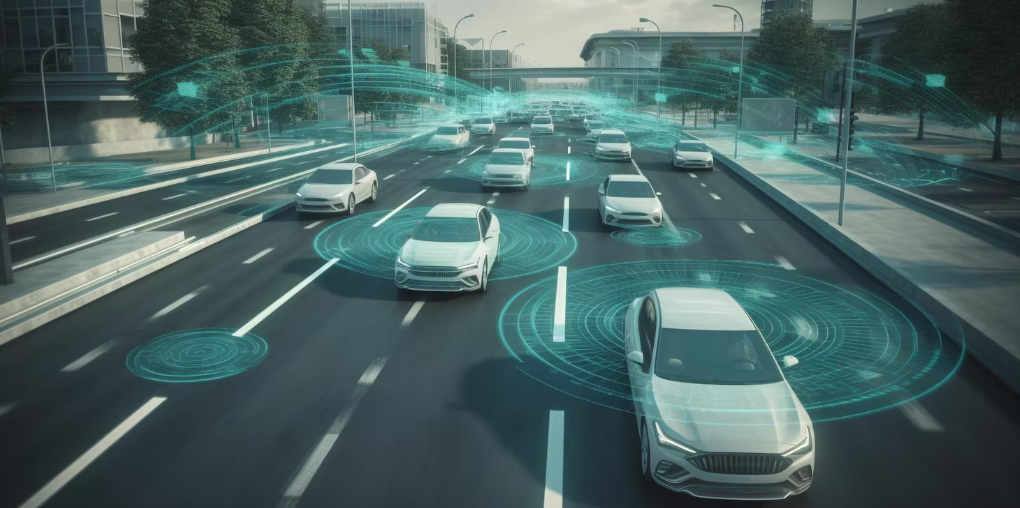
Modern vehicles rely on sophisticated sensing systems to understand their surroundings.
Important technologies include:
Cameras
Cameras help identify:
- Road markings
- Traffic signs
- Vehicles
- Pedestrians
Radar
Radar systems measure distance and speed, making them useful for:
- Adaptive cruise control
- Collision detection
- Object tracking
LiDAR
LiDAR uses laser technology to create detailed environmental maps and plays an important role in some autonomous driving systems.
Connected Vehicle Safety
Connectivity is becoming an important part of automotive safety.
Vehicle-to-everything (V2X) communication allows vehicles to exchange information with:
- Other vehicles
- Traffic signals
- Road infrastructure
- Emergency services
Potential benefits include:
- Earlier hazard warnings
- Improved traffic coordination
- Reduced congestion
- Faster emergency responses
Artificial Intelligence in Vehicle Safety
Artificial intelligence is helping vehicles become smarter and more responsive.
AI systems can analyze:
- Driving patterns
- Road conditions
- Traffic behavior
- Driver attention
Machine learning allows safety systems to improve over time and make more accurate predictions.
Driver Monitoring Systems
As vehicles become more automated, monitoring driver attention has become increasingly important.
Driver monitoring systems can detect signs of:
- Fatigue
- Distraction
- Reduced attention
These systems may use cameras and sensors to provide alerts when drivers need to refocus.
The Connection Between Safety and Autonomous Vehicles
Autonomous driving technology represents the next major stage in vehicle safety evolution.
Self-driving systems aim to reduce accidents caused by:
- Human distraction
- Fatigue
- Poor judgment
- Delayed reactions
Future autonomous vehicles may use advanced AI, sensors, and communication systems to make transportation safer and more efficient.
Challenges in Modern Vehicle Safety
Despite major progress, challenges remain.
Technology Reliability
Safety systems must perform accurately in different conditions, including:
- Heavy rain
- Snow
- Fog
- Poor road markings
Cybersecurity Risks
Connected vehicles must be protected against hacking and unauthorized access.
Driver Overconfidence
Some drivers may rely too heavily on assistance systems and fail to remain attentive.
Cost
Advanced safety technologies can increase vehicle prices, making accessibility a challenge for some consumers.
The Future of Vehicle Safety Technology
The future of automotive safety will likely involve even greater integration between vehicles, infrastructure, and artificial intelligence.
Upcoming developments may include:
- Fully autonomous driving systems
- Smarter collision prediction
- Improved pedestrian protection
- Advanced driver monitoring
- Real-time road condition analysis
- Connected smart city transportation
As technology improves, vehicles will continue shifting from passive protection systems to proactive accident prevention systems.
Conclusion
Vehicle safety technology has evolved dramatically from basic protective features to intelligent systems designed to prevent accidents before they happen. Innovations such as seat belts, airbags, ABS, electronic stability control, advanced driver assistance systems, and artificial intelligence have transformed modern transportation.
While challenges remain, continued advancements in sensors, connectivity, and autonomous technology promise a future where vehicles are safer, smarter, and better equipped to protect drivers, passengers, and pedestrians. The ongoing evolution of automotive safety represents one of the most important achievements in creating a safer transportation environment for everyone.