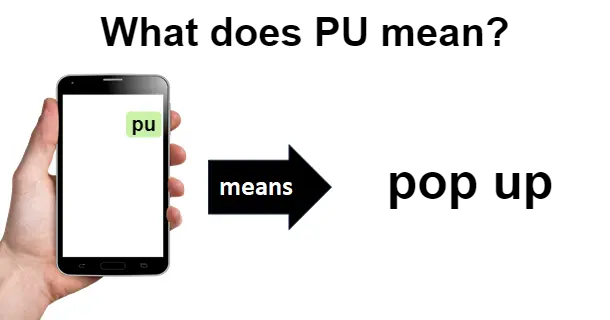
Have you ever received a text that simply said “PU” and wondered what it actually meant? You’re not alone. In today’s fast-paced digital world, people use countless abbreviations and slang terms to communicate quickly, making conversations shorter but often more confusing.
One of those commonly seen abbreviations is “PU.” Depending on the context, PU can carry different meanings in text messages, social media posts, online chats, and gaming conversations.
Understanding what PU means can help you avoid misunderstandings and keep up with modern online communication trends.
What Is PU Meaning in Text?
The most common PU meaning in text is “Pull Up.”
People use “Pull Up” when they want someone to come to a location, join an event, or appear somewhere in person.
Example:
- “We’re at the mall. PU!”
- “Everyone’s hanging out tonight. PU if you’re free.”
- “The game starts at 7. PU.”
In these examples, PU is simply a shorter way of saying “pull up” or “come over.”
However, context matters because PU can also have other meanings.
Other Meanings of PU
| Meaning | Usage |
| Pull Up | Come to a location |
| Phew/Phew! | Relief after stress |
| Stinks/Bad Smell | Expression of disgust |
| Pick Up | In some conversations |
| Personal Update | Occasionally used online |
The surrounding conversation usually reveals the intended meaning.
Why Is PU Popular in Texting?
Text abbreviations save time and make conversations faster. Instead of typing two full words, users can type two letters and still communicate effectively.
Benefits of Using PU
- Faster texting
- Casual communication
- Fits social media character limits
- Popular among younger users
- Common in gaming chats and group messages
As texting culture evolves, abbreviations like PU become part of everyday digital communication.
How Does PU Work in Text Messages?
The meaning depends on context.
PU as “Pull Up”
This is the most common use.
Examples
Friend 1: We’re playing basketball at the park.
Friend 2: Bet. I’ll PU in 10.
Friend 1: Everyone’s here already.
Friend 2: I’m on my way. PU soon.
PU as an Expression of Disgust
Sometimes PU means something smells bad or seems unpleasant.
Examples
- “PU! That milk is spoiled.”
- “PU, that garbage smells terrible.”
This usage is less common in modern texting but still appears occasionally.
PU as “Phew”
People sometimes type PU when expressing relief.
Examples
- “PU, I thought I failed the test.”
- “PU! Glad everything worked out.”
Where Is PU Commonly Used?
PU Meaning on Snapchat
On Snapchat, PU usually means Pull Up.
Examples:
- “We’re at the beach. PU.”
- “Party tonight. PU if you can.”
Snapchat users often use quick abbreviations because messages disappear quickly.
PU Meaning on TikTok
TikTok comments frequently use PU when inviting others to events, livestreams, or locations.
Examples:
- “We’re streaming tonight. PU.”
- “New meetup this weekend. PU.”
PU Meaning on Instagram
Instagram users often use PU in:
- DMs
- Story replies
- Group chats
- Event invitations
Example:
“Everyone’s at the concert. PU.”
PU Meaning in Gaming
Gamers often use PU to invite teammates.
Examples:
- “Need one more player. PU.”
- “Match starts now. PU.”
Why Do People Use PU Instead of Pull Up?
Several reasons explain its popularity.
1. Convenience
Typing two letters is faster than typing two words.
2. Trend Culture
Online communities frequently shorten phrases.
3. Mobile-Friendly Communication
Short messages are easier on mobile devices.
4. Social Media Influence
TikTok, Snapchat, and Instagram encourage quick communication styles.
Examples of PU Meaning in Text Conversations
Example 1: Friends Meeting
Alex: We’re grabbing pizza.
Jake: Where?
Alex: Downtown.
Jake: I’ll PU.
Example 2: Party Invitation
Sarah: Party starts at 8.
Emma: Got it.
Sarah: PU when you arrive.
Example 3: Gaming Session
Player 1: Squad needs one more.
Player 2: I’m logging in now.
Example 4: Expressing Disgust
Friend: Smell this old sandwich.
You: PU! That’s awful.
Common Misunderstandings About PU Meaning in Text
Many people assume abbreviations only have one meaning.
Mistake 1: Ignoring Context
Always read surrounding messages.
Mistake 2: Assuming Everyone Knows the Slang
Different age groups use slang differently.
Mistake 3: Using It in Professional Messages
PU belongs in casual communication.
Avoid using it in:
- Business emails
- Job applications
- Professional reports
- Academic assignments
Tips for Using PU Correctly
Do
✅ Use with friends
✅ Use in casual chats
Don’t
❌ Use in formal communication
❌ Assume everyone understands it
PU vs Similar Texting Slang
Understanding related abbreviations can help avoid confusion.
| Slang | Meaning | Example |
| PU | Pull Up | PU tonight |
| HMU | Hit Me Up | HMU later |
| BRB | Be Right Back | BRB, dinner |
| WYD | What You Doing | WYD tonight? |
| TBH | To Be Honest | TBH, I agree |
| IMO | In My Opinion | IMO that’s best |
Which Is More Common?
- PU = invitation/action
- HMU = contact request
- WYD = conversation starter
Each serves a different purpose.
Real-Life Social Media Examples of PU
Example on Snapchat
“Movie night at my place. PU.”
Example on Instagram
“Everyone’s already here. PU ASAP.”
Example on TikTok
“Live starts in 5 minutes. PU.”
Example in Group Chats
“Game night starts at 9. PU if you’re joining.”
These examples show how naturally the abbreviation fits online conversations.
Suggested Visuals for This Article
To improve engagement, consider adding:
- Infographic showing PU meanings.
- Texting slang comparison chart.
- Social media conversation screenshots.
- PU usage flowchart.
- Examples from messaging apps.
These visuals can improve readability and user retention.
When Should You Avoid Using PU?
There are situations where using the abbreviation may create confusion.
Professional Settings
Avoid using PU in:
- Work emails
- Client communication
- Business meetings
- Professional networking
Formal Education
Use complete phrases in:
- School assignments
- Research papers
- Academic discussions
International Communication
Not everyone understands English texting slang.
Using full words may prevent misunderstandings.
The Future of PU in Digital Communication
Internet slang constantly evolves. While some abbreviations disappear over time, others become part of everyday online language.
PU remains popular because:
- It’s short.
- It’s easy to understand.
- It’s useful across platforms.
- It fits modern texting habits.
As social media continues growing, abbreviations like PU will likely remain common among younger users and online communities.
Frequently Asked Questions
What does PU mean in text?
PU usually means “Pull Up,” which means to come over or arrive at a location.
How is PU used in Snapchat?
On Snapchat, PU commonly means “Pull Up” and is often used in invitations.
Why do people say PU in messages?
People use PU because it is quicker than typing “Pull Up.”
Can PU mean something else?
Yes. Depending on context, it can express disgust, relief, or occasionally other meanings.
Is PU considered slang?
Yes. PU is an internet slang abbreviation commonly used in casual conversations.
Should I use PU in professional communication?
No. Professional communication should use complete words and clear language.
Is PU popular in 2026?
Yes. PU continues to appear across texting apps, social media platforms, and gaming communities.
Conclusion
Understanding the PU meaning in text helps you navigate modern digital communication with confidence. While the abbreviation most commonly means “Pull Up,” it can also express disgust, relief, or other meanings depending on context. Reading surrounding messages carefully is the best way to determine what someone means.
As texting slang continues evolving, knowing common abbreviations such as PU, HMU, WYD, and TBH can make online conversations easier to understand. Whether you’re chatting with friends, using Snapchat, scrolling through TikTok, or participating in gaming communities, PU is a term you’re likely to encounter frequently.

I am Jane Austen, a passionate writer who loves creating helpful and engaging content for readers around the world.
I am dedicated to sharing easy-to-understand information, useful tips, and well-researched articles on different topics.
I am always focused on delivering clear, original, and reader-friendly content that keeps visitors informed and entertained.
I am committed to making every article valuable, enjoyable, and easy for everyone to understand.