Introduction
The gaming industry has always been driven by innovation, from early arcade machines and pixel-based adventures to realistic 3D environments and online multiplayer experiences. Today, virtual reality (VR) represents one of the most exciting developments in gaming technology. By combining advanced hardware, immersive visuals, and interactive controls, VR allows players to step inside digital worlds rather than simply watching them from a screen.
Virtual reality is changing how games are created and experienced. It introduces new levels of immersion, encourages physical interaction, and gives developers new ways to tell stories. As VR technology continues to improve, it is becoming a major force shaping the future of entertainment.
What Is Virtual Reality Gaming?
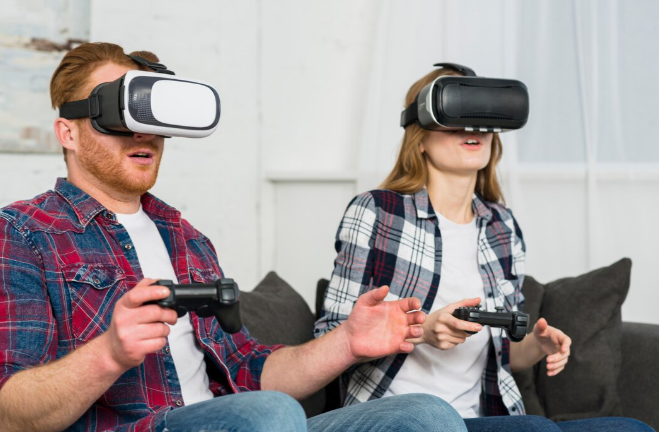
Virtual reality gaming uses specialized devices to create simulated environments where players can interact with digital worlds. Unlike traditional gaming setups, VR systems track a player’s movements and translate them into the game.
A typical VR gaming experience includes:
- VR headsets with high-resolution displays
- Motion controllers for interaction
- Position tracking sensors
- Spatial audio systems
- Haptic feedback technology
These components work together to create a feeling of presence, making players feel as though they are actually inside the game environment.
Creating More Immersive Worlds
One of the biggest advantages of virtual reality is its ability to create highly immersive experiences. Traditional games place players outside the action, while VR puts them directly into the virtual environment.
Players can:
- Look around 360-degree spaces
- Explore detailed locations
- Interact with virtual objects
- Experience realistic movements
- Become part of the game’s story
Whether exploring a fantasy kingdom, racing through futuristic cities, or surviving in challenging environments, VR makes gameplay more engaging and memorable.
Changing the Way Players Interact
Virtual reality has transformed traditional gaming controls. Instead of pressing buttons to perform every action, players can use natural movements to interact with the digital world.
VR allows gamers to:
- Pick up and examine objects
- Use hand gestures
- Aim and move naturally
- Solve puzzles through physical actions
- Explore environments at their own pace
This creates a more active gaming experience and makes players feel connected to the virtual world.
Revolutionizing Game Design
VR has encouraged developers to rethink how games are created. Traditional game mechanics often need to be redesigned for virtual environments to ensure comfort, realism, and enjoyment.
Developers now focus on:
- Immersive level design
- Realistic movement systems
- Interactive environments
- First-person experiences
- Player-centered storytelling
Virtual reality has opened opportunities for entirely new game genres and creative approaches.
The Role of Motion Tracking Technology
Motion tracking is a key element of VR gaming. It allows the system to detect player movements and reflect them accurately within the game.
Advanced tracking technology improves:
- Movement accuracy
- Object interaction
- Gameplay responsiveness
- Player control
- Overall immersion
As tracking systems become more advanced, future VR experiences will feel even more natural and realistic.
Haptic Feedback Creates Realistic Sensations
Haptic feedback technology adds another layer of realism by allowing players to physically feel virtual interactions.
Modern haptic systems can simulate:
- Touch sensations
- Object impacts
- Environmental effects
- Movement resistance
- Physical feedback
This technology helps bridge the gap between the physical world and virtual experiences.
Social Connections in Virtual Reality
Virtual reality is also changing multiplayer gaming by creating shared digital spaces where players can interact more naturally.
Social VR experiences allow users to:
- Communicate through virtual avatars
- Meet players from around the world
- Attend virtual events
- Collaborate on missions
- Explore digital environments together
These experiences create communities that feel more personal compared to traditional online gaming.
VR Gaming and Physical Activity
Unlike many traditional games, VR often encourages movement. Many virtual reality games require players to stand, move, reach, and perform physical actions.
Benefits of active VR gaming include:
- Increased movement during gameplay
- Improved coordination
- Better balance
- More engaging fitness experiences
- Fun alternatives to traditional exercise
This has helped create a growing connection between gaming and wellness.
Improving Storytelling Through VR
Virtual reality introduces new possibilities for storytelling by allowing players to experience events from a first-person perspective.
VR storytelling can create deeper emotional connections through:
- Immersive environments
- Interactive characters
- Player-driven decisions
- Realistic sound experiences
- Personal exploration
Instead of watching a story unfold, players become active participants within the narrative.
Artificial Intelligence and the Future of VR
Artificial intelligence is expected to further enhance virtual reality gaming. AI can help create smarter characters, more realistic environments, and personalized experiences.
Future AI-powered VR features may include:
- Adaptive gameplay difficulty
- Intelligent virtual characters
- Dynamic storylines
- Personalized challenges
- More realistic simulations
The combination of AI and VR could create gaming worlds that respond uniquely to each player.
Challenges of Virtual Reality Gaming
Although VR has many advantages, it still faces challenges that developers are working to overcome.
Common limitations include:
- Expensive hardware
- Motion sickness concerns
- Space requirements
- Limited availability of VR games
- Battery limitations for wireless devices
- Need for more comfortable headsets
Future improvements will focus on making VR more affordable, lightweight, and accessible.
The Future of VR Gaming
The future of virtual reality gaming looks promising as technology continues advancing. Better graphics, improved hardware, and faster connectivity will create even more realistic experiences.
Future developments may include:
- Lightweight wireless headsets
- Advanced eye tracking
- Full-body motion capture
- Realistic virtual environments
- AI-powered game worlds
- More immersive multiplayer experiences
As these technologies mature, VR could become a standard part of gaming rather than a specialized experience.
How VR Is Shaping the Gaming Industry
Virtual reality is influencing the entire gaming ecosystem, including developers, players, and entertainment companies.
Its impact can be seen through:
- New gaming genres
- Innovative gameplay mechanics
- More immersive entertainment
- Creative storytelling methods
- Expanded gaming communities
VR is changing the definition of gaming by transforming it from an activity of watching and controlling into an experience of exploring and interacting.
Conclusion
Virtual reality is revolutionizing gaming by creating deeper immersion, realistic interactions, and entirely new ways to experience digital worlds. From advanced motion tracking and haptic feedback to AI-powered environments and social virtual spaces, VR continues to push the boundaries of interactive entertainment.
While challenges remain, ongoing advancements are making virtual reality more accessible and powerful. As technology evolves, VR will continue shaping the future of gaming and bringing players closer than ever to the worlds they love to explore.